LOCATION: GREECE, MYKONOS, ALEOMANDRA
ARCHITECT: K-STUDIO
STYLE: CONTEMPORARY CYCLADIC
PHOTOGRAPHY: CLAUS BRECHENMACHER, REINER BAUMANN
MYKONOS HAS NEVER BEEN PARTICULARLY SHY ABOUT SHOWING OFF. VILLA MANDRA, HOWEVER, PREFERS TO KEEP A LOW PROFILE.
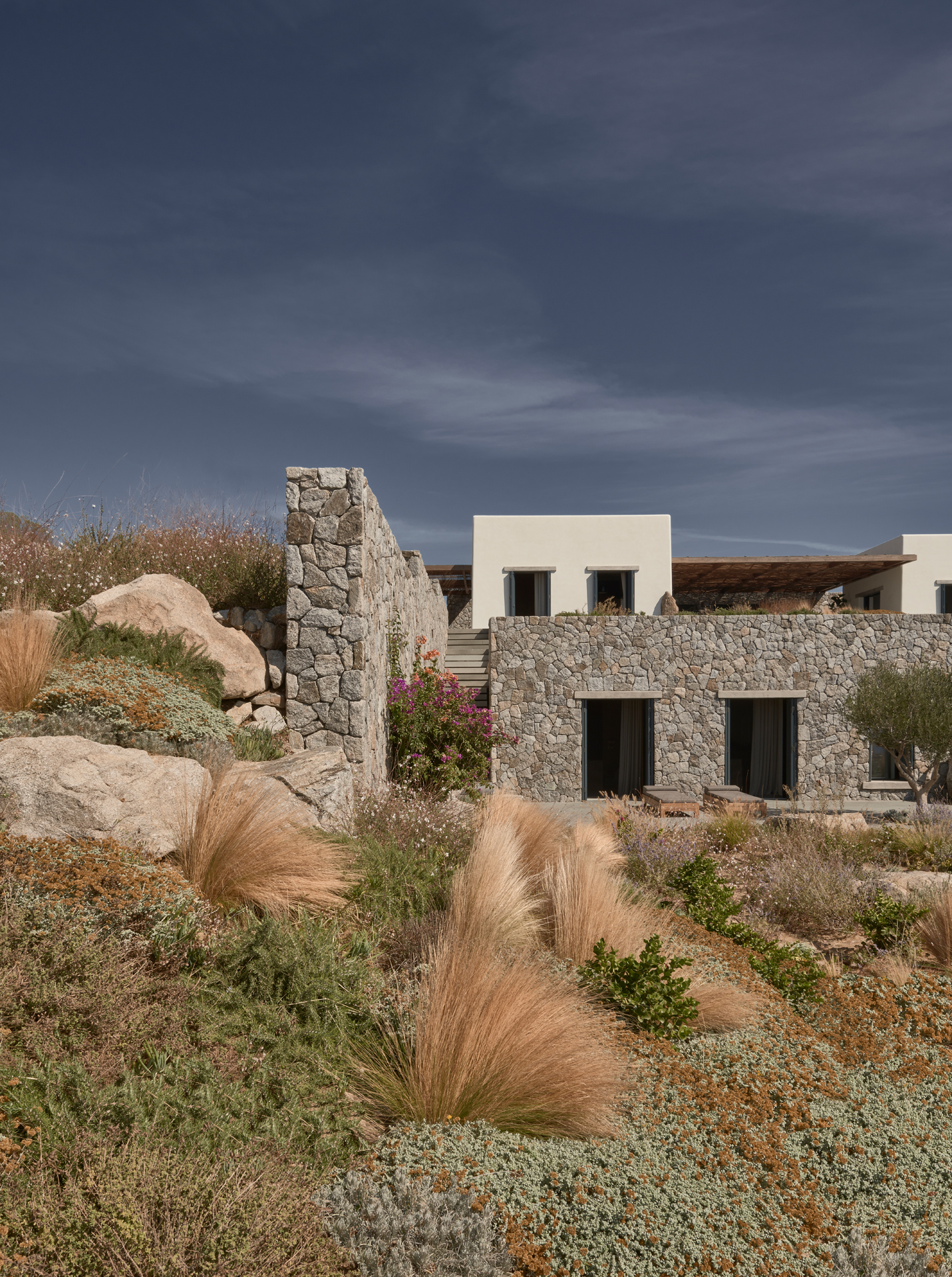
Perched on the rocky ridge of Aleomandra, overlooking the Aegean Sea and the neighbouring island of Delos, this quietly remarkable villa is almost invisible from the road. There are no grand entrances or architectural declarations. Instead, a series of low stone walls and whitewashed volumes settle into the landscape as though they have always belonged there.
Designed by Athens-based K-STUDIO, Villa Mandra takes its inspiration from the traditional architecture of the Cyclades, where buildings have long been shaped as much by climate and necessity as by aesthetics. The familiar white walls, sheltered courtyards and compact forms of the Greek islands were never simply a matter of style. They offered practical answers to intense sunlight, strong winds and the challenges of building on rocky terrain.
At Villa Mandra, these time-honoured principles have been given a distinctly contemporary interpretation.
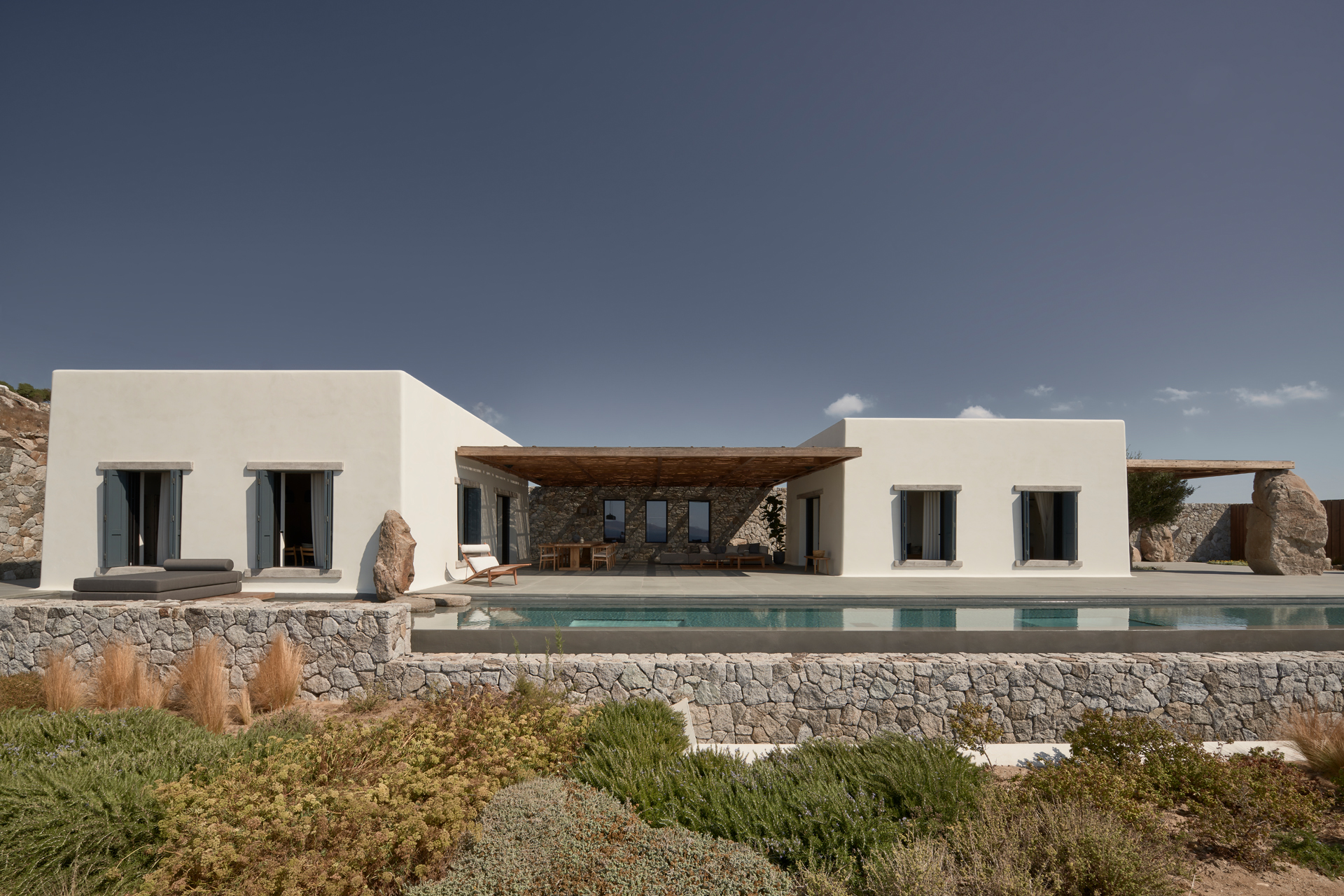
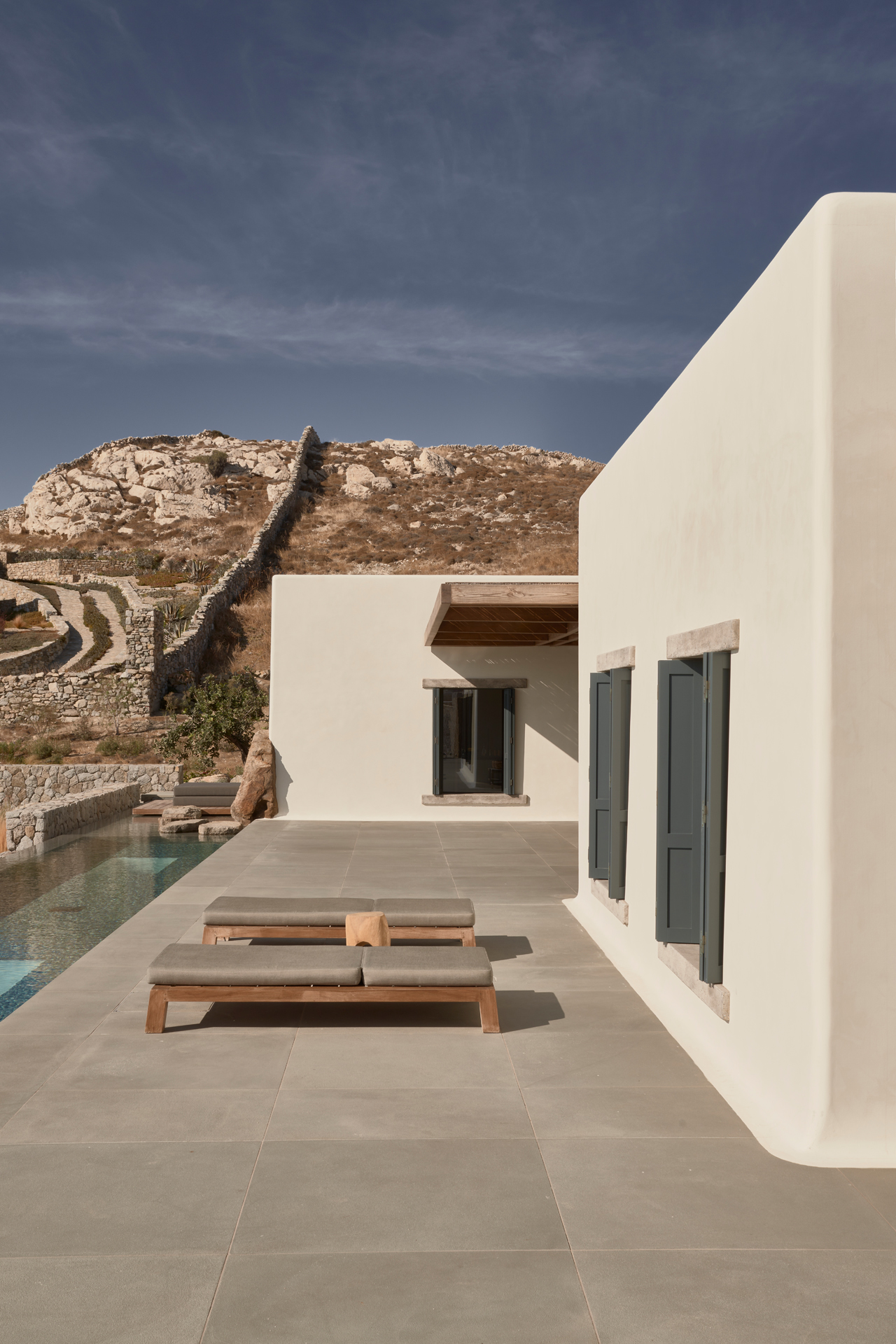
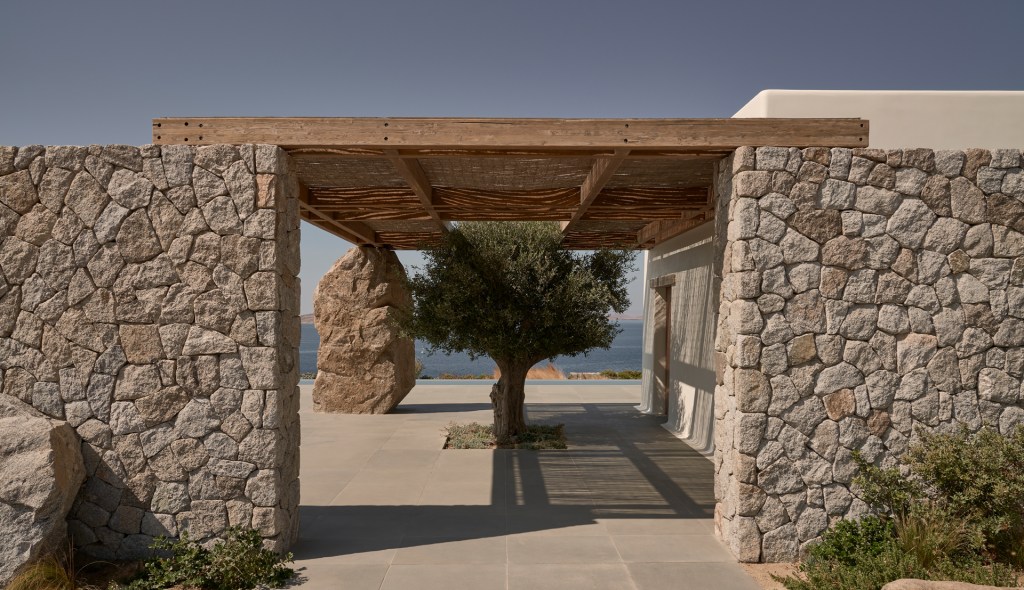
Rather than creating one imposing residence, the architects divided the house into three modest volumes. Two are finished in the traditional white render of the Cyclades, their softly rounded edges catching the changing Mediterranean light. The third is built from stone excavated directly from the site, allowing the architecture to share something quite literal with the ground beneath it.
The arrangement is deliberately restrained. From a distance, the buildings appear almost incidental to the landscape. It is only on approaching the house that the precision of the design becomes apparent.
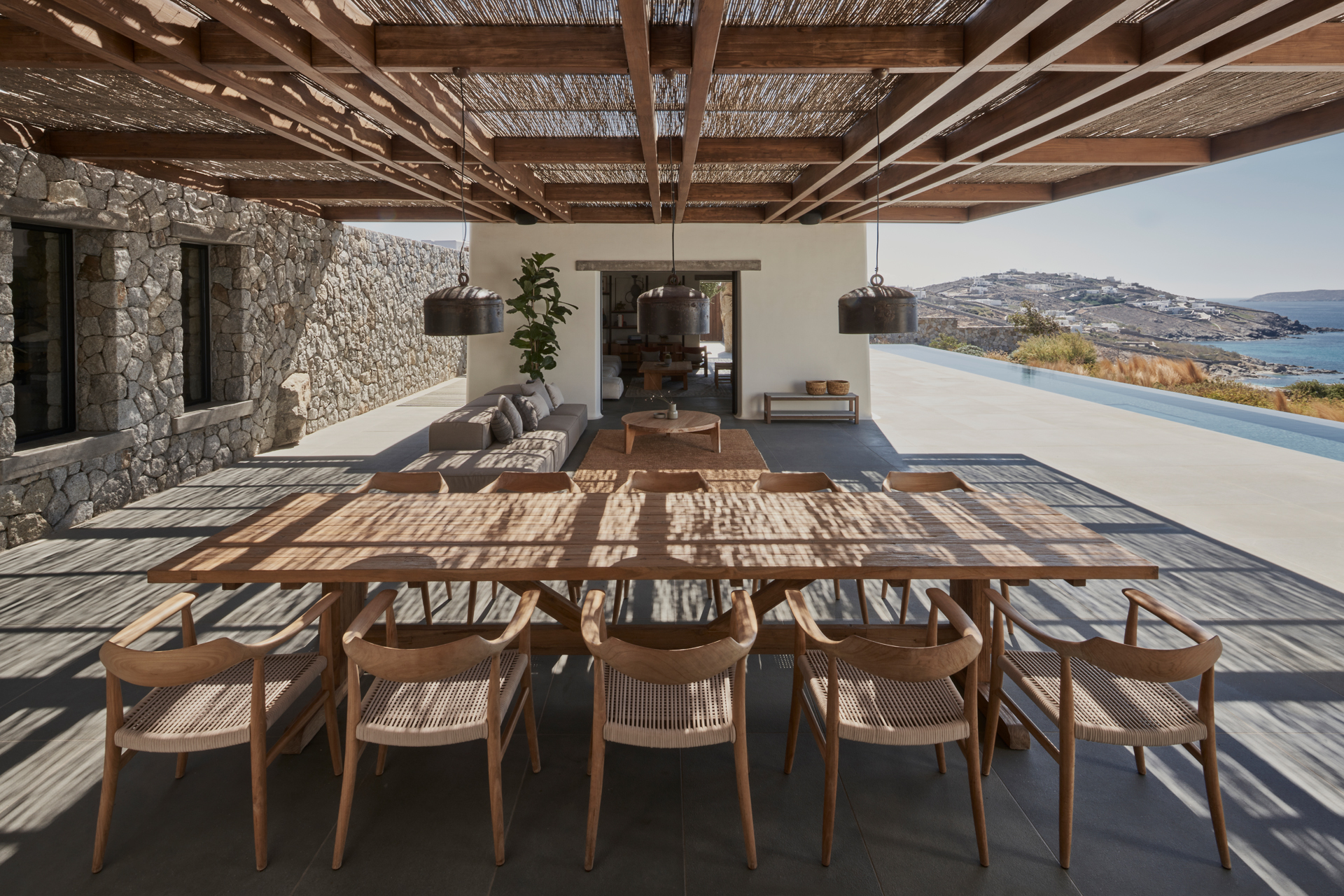
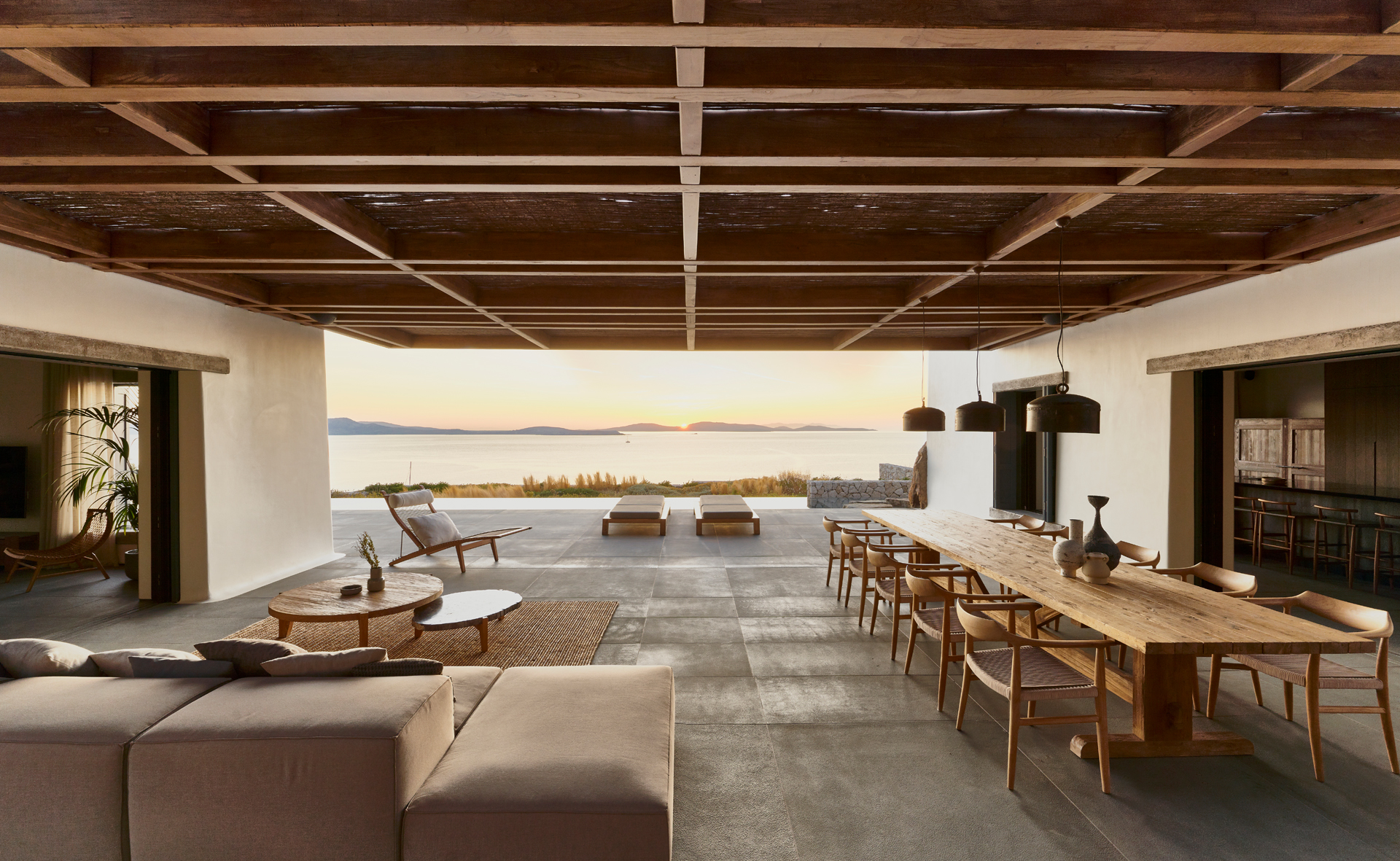
At its heart lies a generous open-air courtyard, sheltered beneath an expansive chestnut pergola. This is the true centre of Villa Mandra — a place for long lunches, afternoon conversations and the sort of evenings that have a habit of continuing well beyond their original plans.
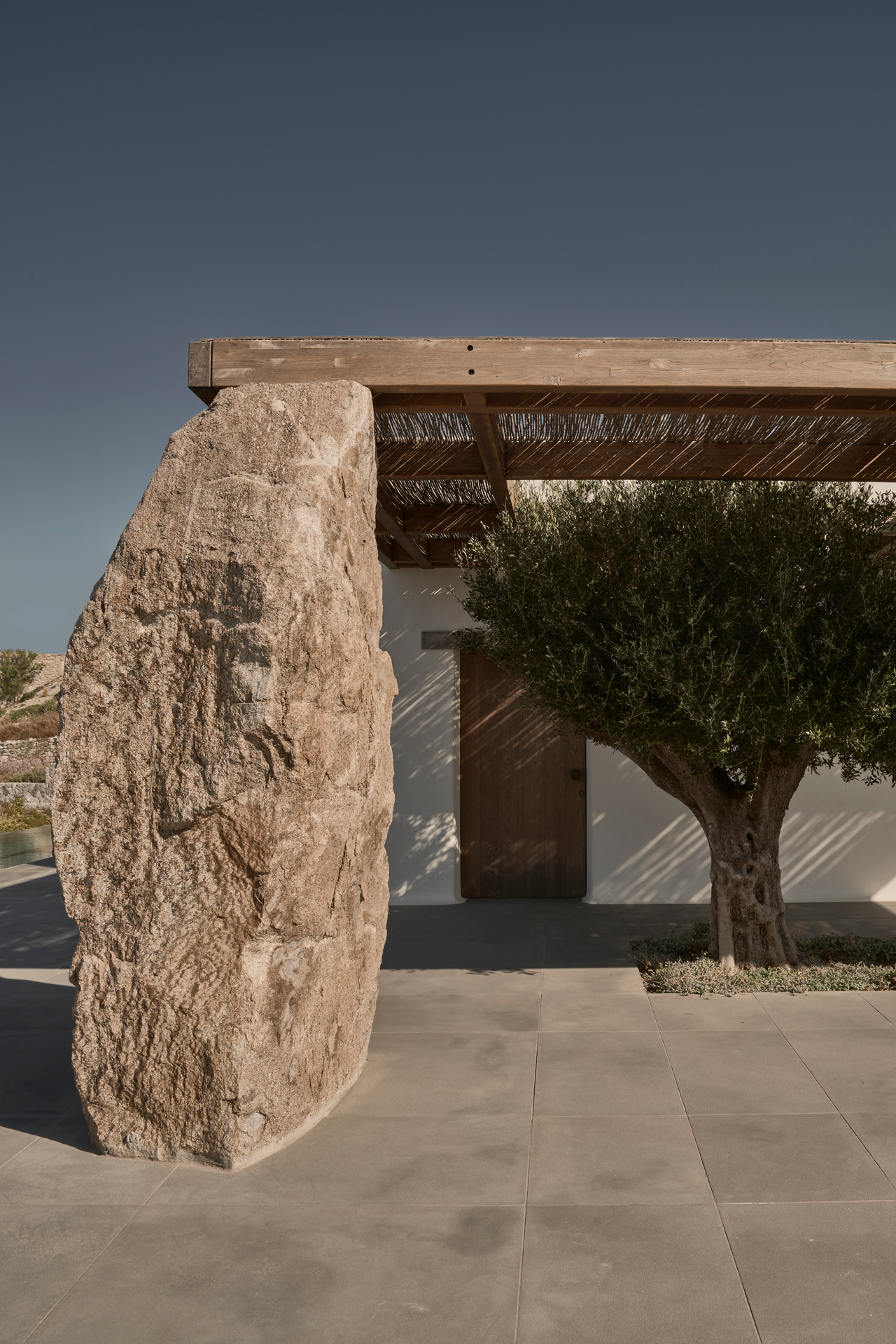
The pergola is particularly interesting. Inspired by traditional timber structures found throughout the Greek islands, it has been re-engineered using laminated timber beams to create a light yet structurally robust canopy. Its geometric lattice filters the powerful summer sun, casting shifting patterns of shadow across the courtyard throughout the day.
It is a beautiful example of how traditional architecture can be improved through contemporary construction without losing its essential character.
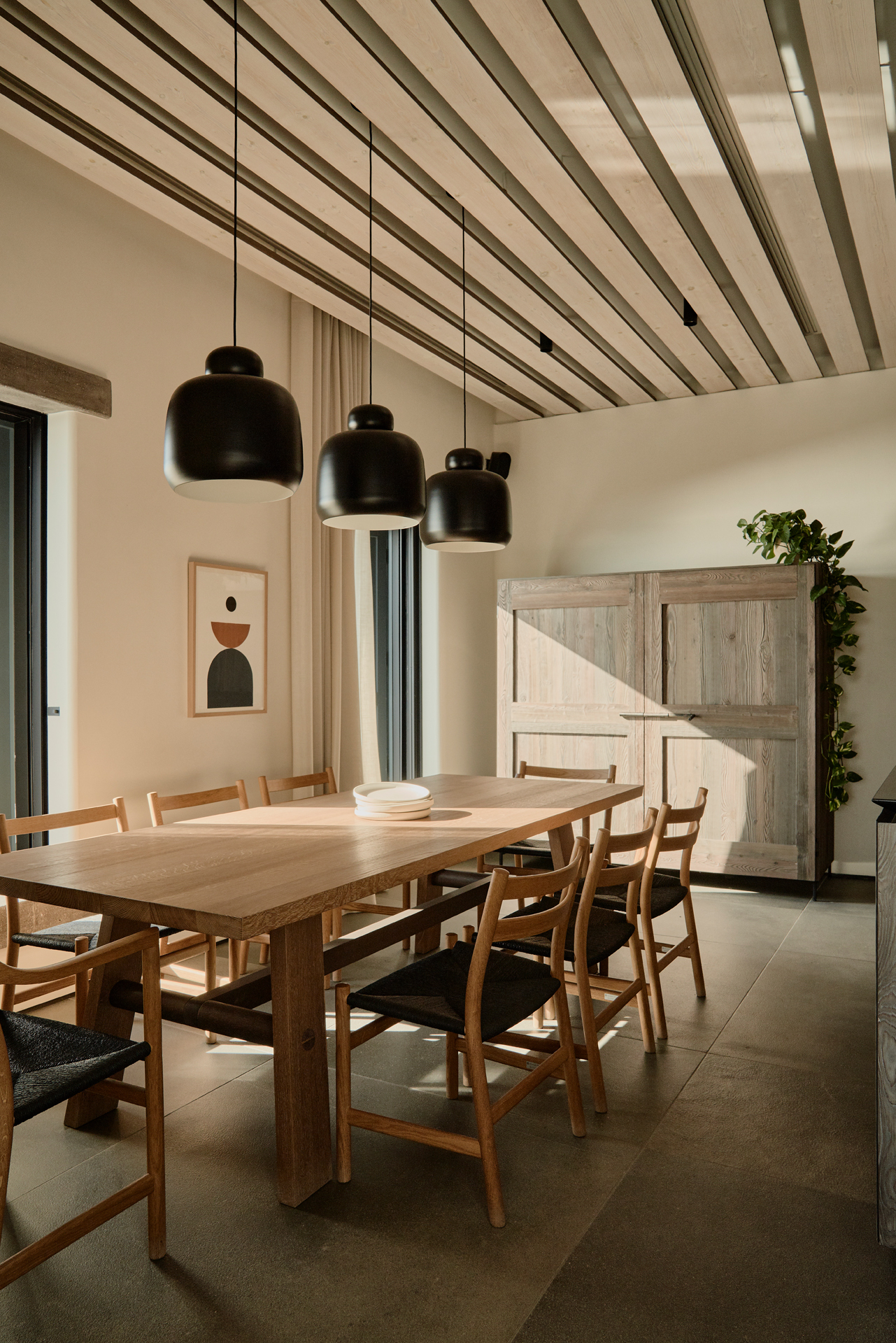
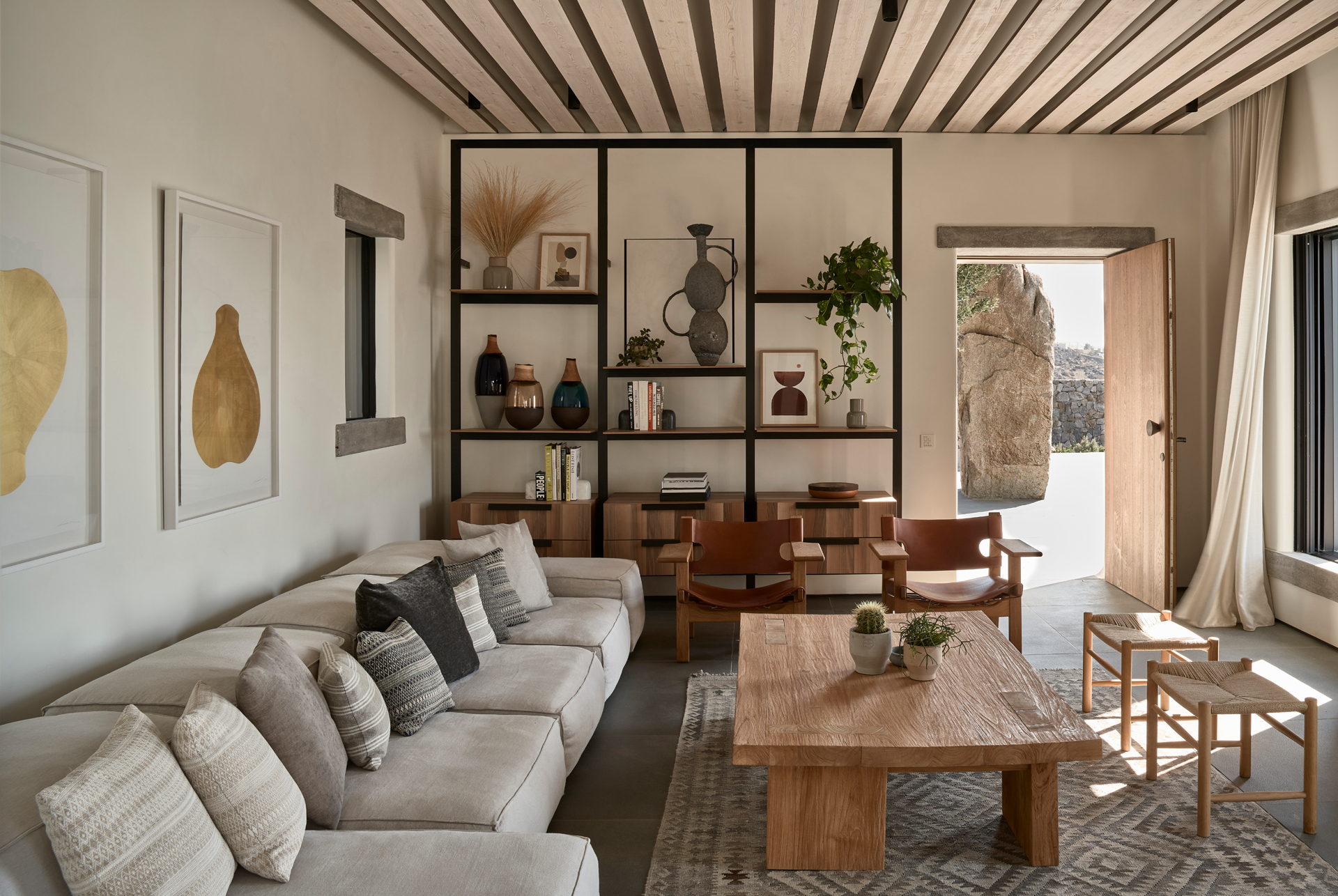
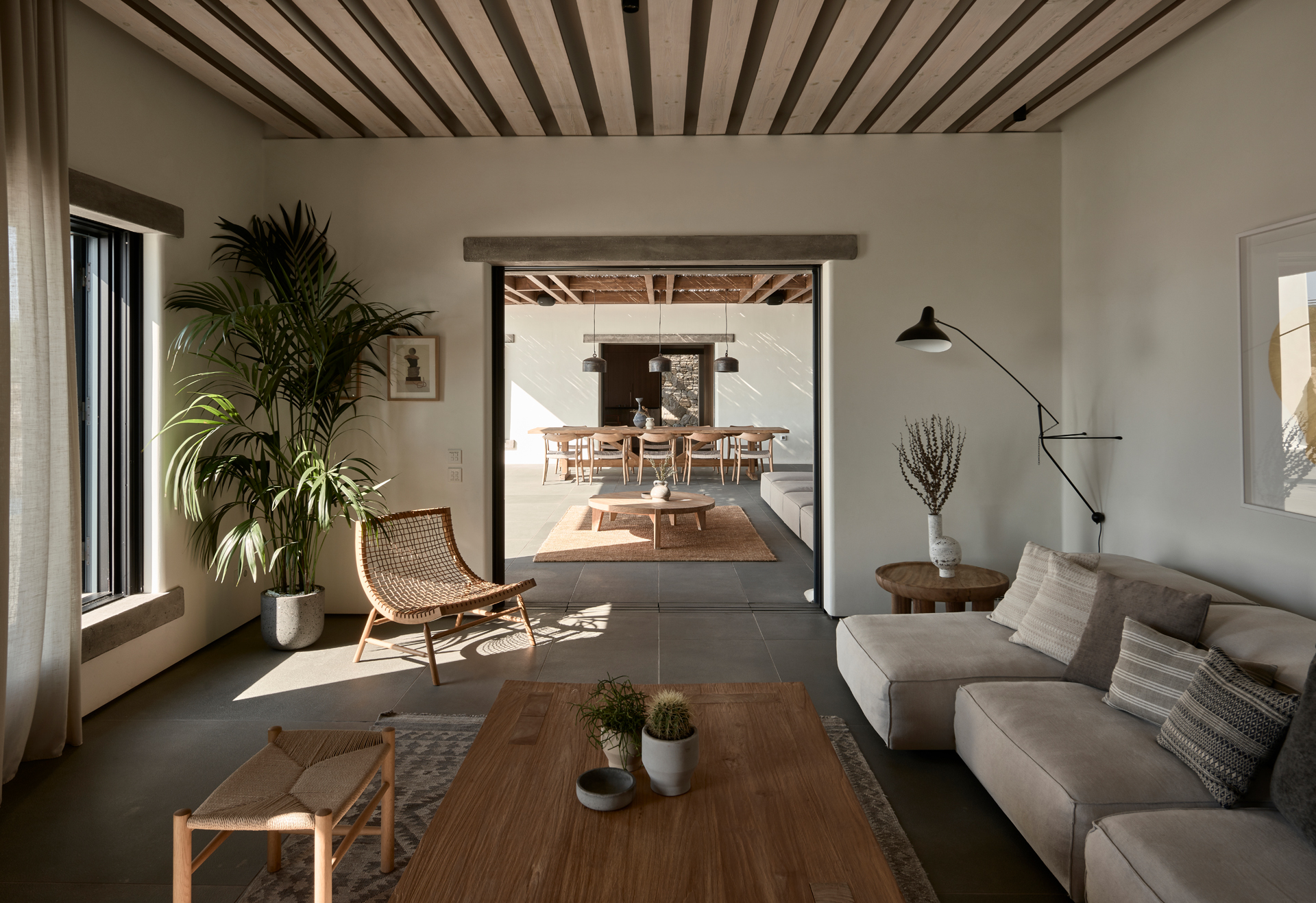
The courtyard connects naturally with the living room and kitchen, while opening towards the swimming pool and landscaped gardens beyond. Interior and exterior spaces become part of a single, continuous experience, reflecting a Mediterranean way of living in which the distinction between indoors and outdoors is often pleasantly irrelevant.
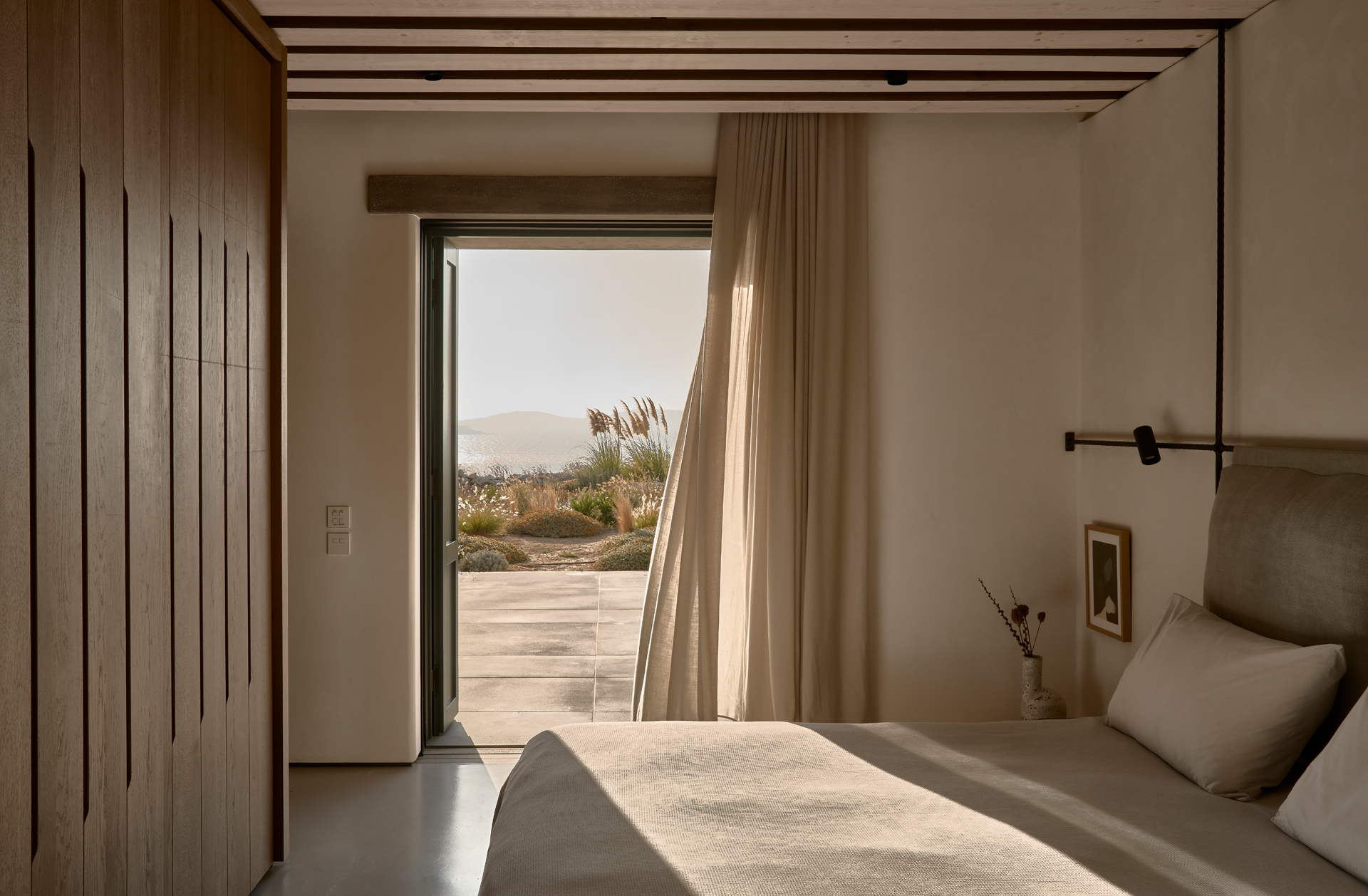
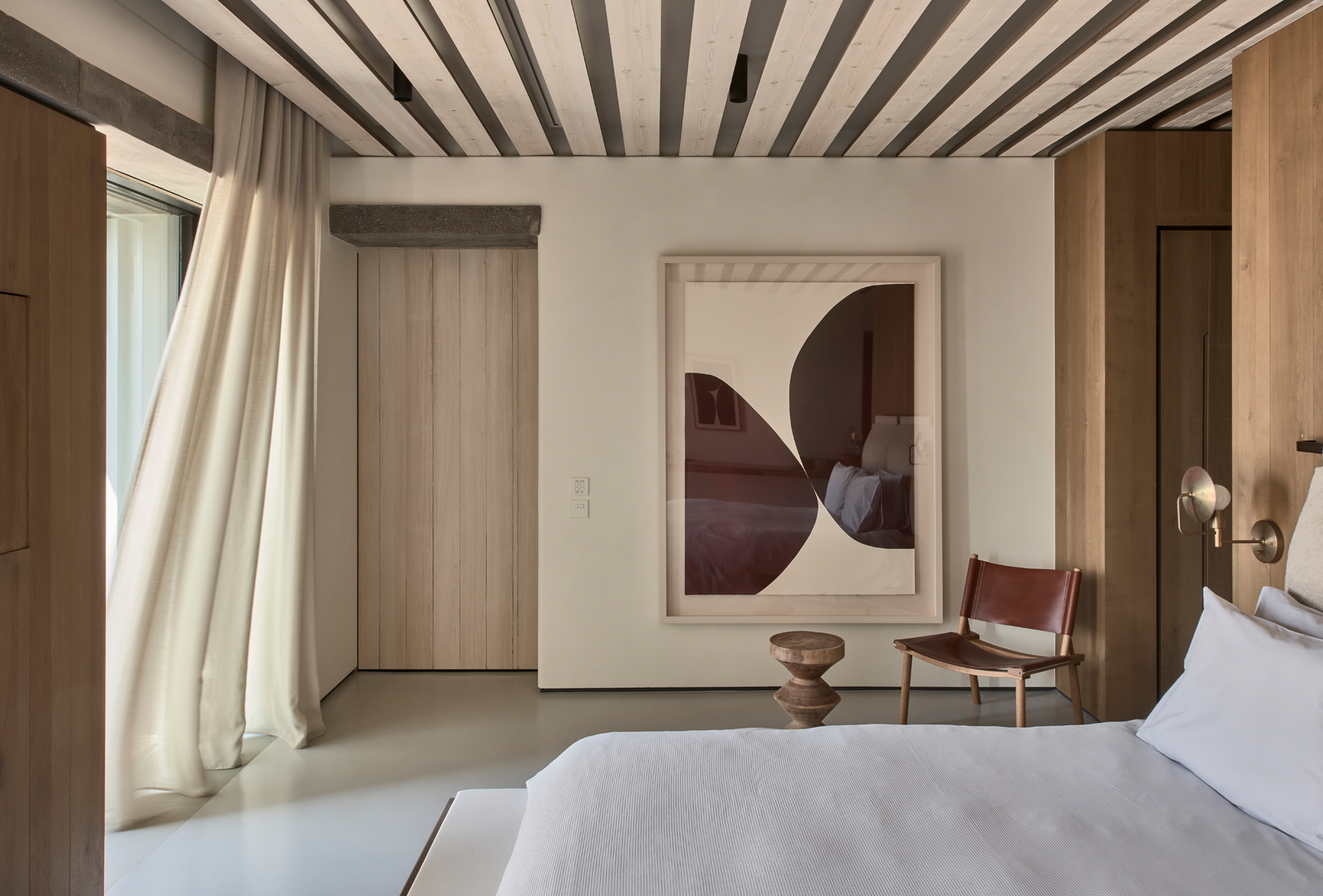
Privacy has been considered just as carefully as sociability. The bedrooms are positioned beneath the pool garden, separated from the main gathering spaces and looking out towards the sea. This arrangement reduces the visual impact of the house while allowing guests to retreat into their own quieter corners.
Throughout the villa, the materials remain reassuringly honest. Hand-built stone walls introduce a rugged texture, contrasting with the smooth surfaces of lime-washed plaster. Timber brings warmth and softness, while the restrained palette allows the changing light and surrounding landscape to provide much of the decoration.
There is little interest here in recreating a picturesque version of the past. Instead, K-STUDIO has taken the practical intelligence of traditional Cycladic building and translated it into a contemporary architectural language.
And then there is the view.
Across the water lies Delos, one of the most significant archaeological sites in Greece. In ancient mythology, the island was the birthplace of Apollo and Artemis; in antiquity, it became an important religious and commercial centre of the Aegean world.
Today, its archaeological remains offer a reminder that these waters have witnessed rather more than the arrival of luxury yachts.
From Villa Mandra, the island appears on the horizon, lending an unexpected historical dimension to an otherwise wonderfully uncomplicated summer setting.
What makes the house memorable is the confidence of its restraint. Every architectural decision seems intended to make life feel a little easier: shade where it is needed, privacy where it matters and open spaces that encourage people to spend time together.
The result is a villa that feels deeply connected to Mykonos without relying on the familiar visual clichés of island luxury.
AFTER ALL, WHEN YOU HAVE THE AEGEAN AT YOUR FEET, THERE IS VERY LITTLE NEED TO MAKE A SCENE.